Creating a Safe and Stimulating Nursery Environment
19 August 2026
There is a moment that stays with every parent. You stand in an empty room, maybe with a fresh coat of paint on the walls, and you realize this space is about to hold the most important person in your life. The pressure to get it right feels enormous. And honestly, it should feel that way. But the goal is not perfection. The goal is a room that protects your child while also challenging their growing mind. That balance, between safety and stimulation, is the real art of nursery design.
Most parents start with the visual. They pick a theme, a color palette, and adorable decor. But the most effective nurseries are built from the ground up, starting with how a baby actually moves, sleeps, and explores. You are not just decorating a room. You are engineering an environment for a tiny human who has zero self-preservation instincts and an endless appetite for discovery.
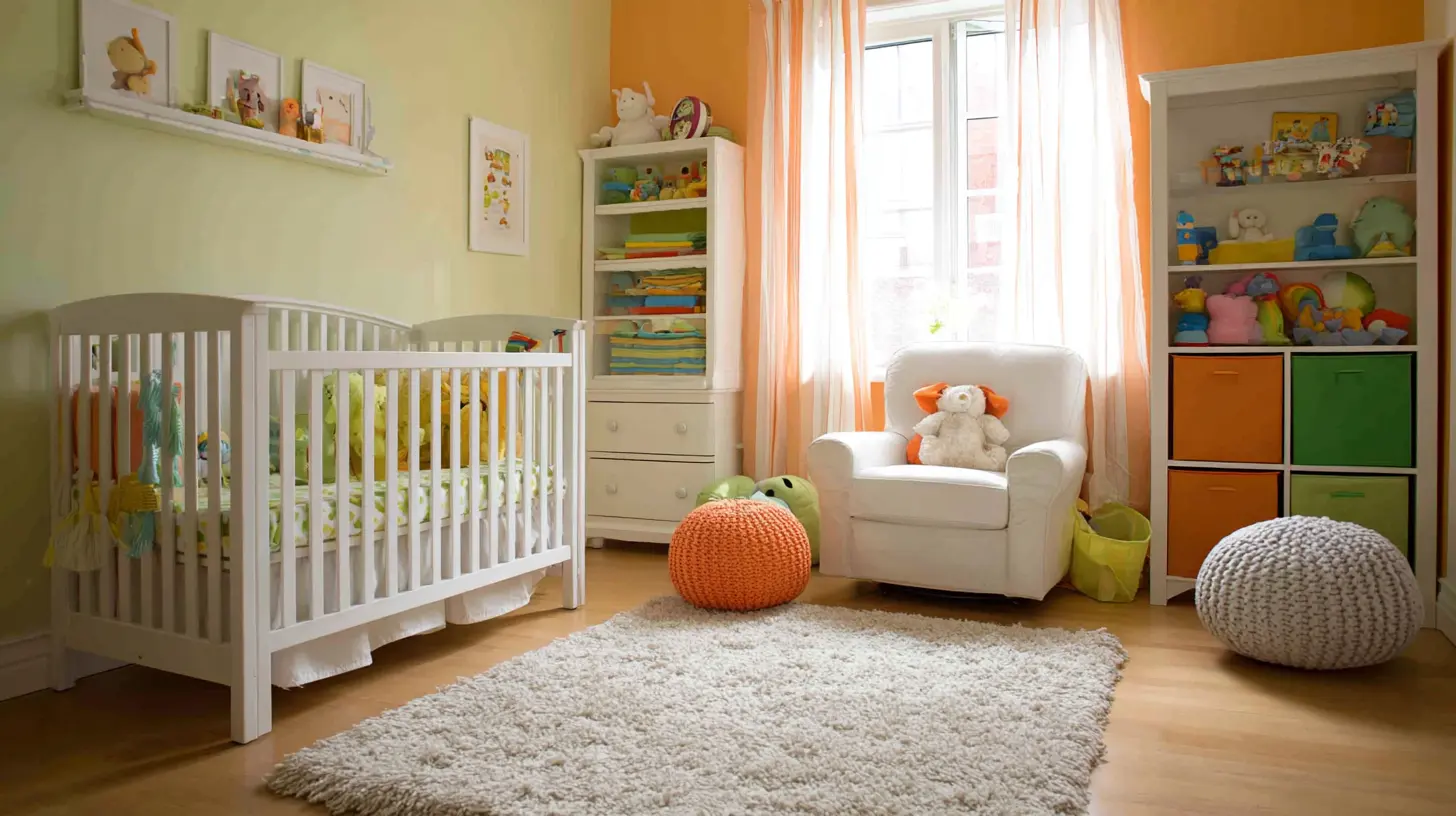
The True Meaning of Safe: Beyond the Obvious Hazards
When people hear nursery safety, they think of crib bumpers, outlet covers, and anchoring furniture. Those are essential. But true safety goes deeper. It means understanding how a child perceives the world and where the hidden risks are hiding in plain sight.The Crib is a Stage, Not a Storage Unit
The single most important piece of furniture in the nursery is the crib. And it is also the most misunderstood. The safe sleep guidelines from pediatric organizations are clear: a firm mattress, a tight-fitting sheet, and nothing else in the crib. No pillows, no blankets, no stuffed animals, no positioners. That is it. But why is this so strict?The reason is suffocation and Sudden Infant Death Syndrome (SIDS) risk. A newborn cannot roll over, but they can shift their face into a soft object. They cannot pull a blanket off their face. They cannot push a pillow away. Their airway is small and easily obstructed. The crib should feel almost stark to an adult eye. That emptiness is what protects them.
However, there is a nuance. Many parents feel that a bare crib looks cold or unwelcoming. This is a cultural feeling, not a biological one. A baby does not care about aesthetics. They care about a stable, firm surface that supports their developing spine. If you want to add warmth, use a sleep sack or a wearable blanket. That keeps them warm without adding loose fabric to the sleeping area.
The common mistake here is buying a crib with drop-side rails. They were banned in the United States years ago due to entrapment and strangulation risks, but you can still find them used. Never use a hand-me-down crib that is older than ten years, and always check for recalls. The crib is not a place for sentimentality. It is a place for engineering.
Furniture Anchoring is Non-Negotiable
Here is a statistic that should scare every parent: a child dies every few weeks in the United States from a furniture tip-over. Dressers, bookshelves, and changing tables are top-heavy. When a toddler starts climbing, and they will climb, they will pull on open drawers to hoist themselves up. If the furniture is not anchored to the wall, it becomes a falling hazard.The expert approach is not to just anchor the tall furniture. Anchor everything that is over 30 inches tall. Use anti-tip straps or brackets that are rated for the weight of the furniture. But here is the trade-off: anchors only work if they are installed correctly. A flimsy drywall anchor will pull out under stress. You need to screw into a wall stud or use heavy-duty toggle bolts.
And do not forget the changing table. The changing table is one of the most dangerous pieces of furniture in the home because it invites you to look away for a second. The rule is simple: one hand on the baby at all times. But the design can help you. A changing pad with a concave shape and a safety strap gives you a second layer of defense. Still, the strap is not a restraint system. It is a reminder. The safest changing setup is actually a changing pad on the floor. It eliminates the drop risk entirely. It is harder on your back, but it is the safest option for a wiggly baby.
Window Coverings and Blind Cords
This is a silent killer that many parents overlook. The cords from blinds, curtains, and shades can form a loop. A baby or toddler can get their head caught in that loop while playing near a window. The result is strangulation. It happens quickly and quietly.The best practice is to install cordless window coverings. They are widely available now and not much more expensive than traditional blinds. If you already have corded blinds, you can retrofit them with cord cleats or tension devices that keep the cords out of reach. But the simplest solution is to avoid them altogether. Roman shades with loops on the back are also a hazard. Use cordless cellular shades or curtains that do not have any drawstrings.
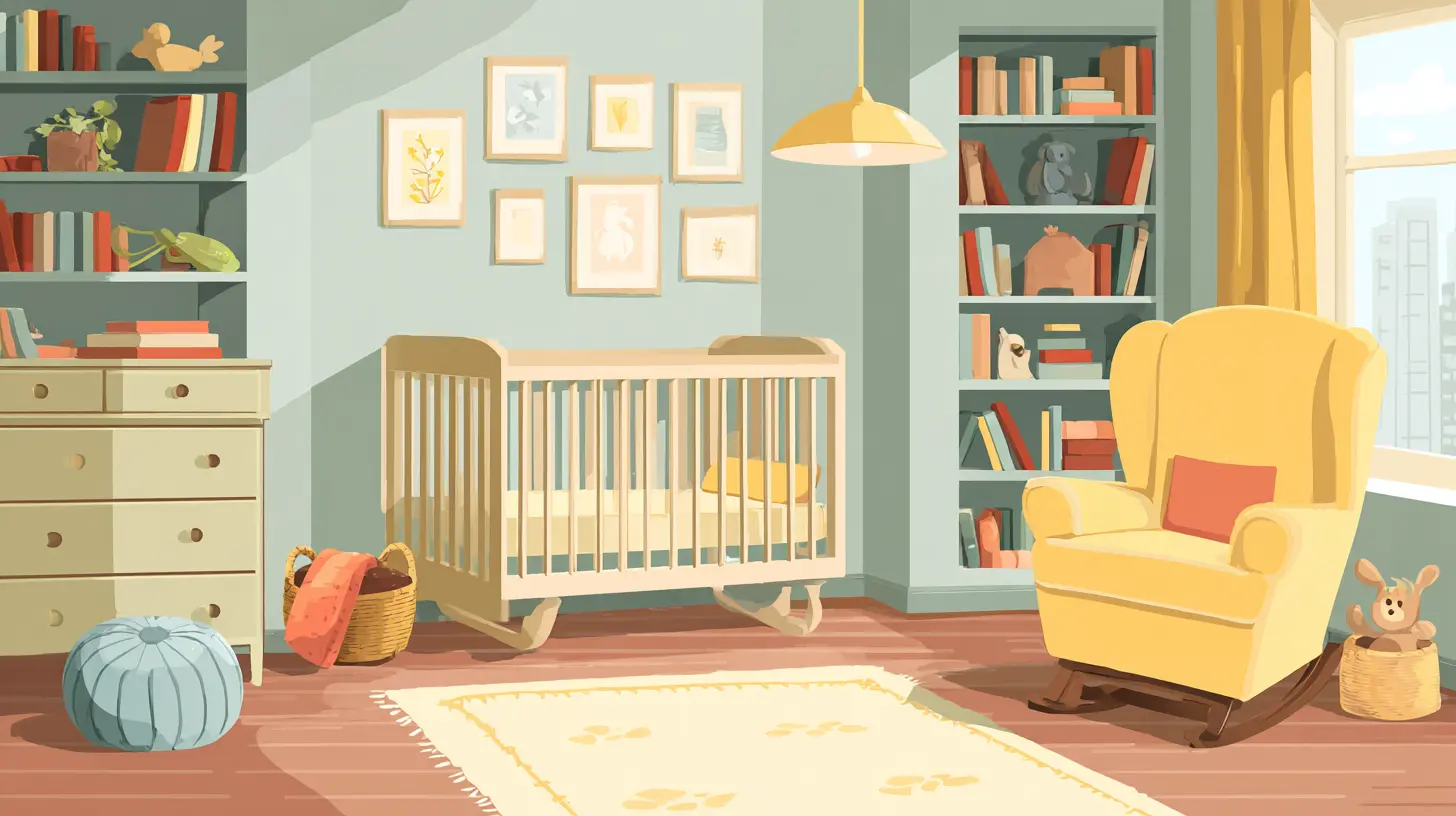
The Stimulation Side: Designing for a Developing Brain
Safety is the floor. Stimulation is the ceiling. A nursery that is only safe is a box. A nursery that is only stimulating is a hazard. The goal is to create a space that invites exploration without overwhelming the senses.Visual Stimulation: The Right Kind of Busy
Newborns have poor vision. They see about 8 to 12 inches in front of them, and they prefer high-contrast patterns like black and white or bold geometric shapes. They are not interested in pastel murals or soft watercolors. Those are for the parents.So, when you design the visual field, think about where the baby spends their awake time. If they are on a play mat on the floor, what do they see when they look up? If they are in a bouncer, what is at their eye level? The best visual stimulation is placed at the baby's level, not at adult standing height.
You can create a high-contrast gallery wall near the changing table. This is a clever trick because changing time is often a moment of resistance. The baby does not want to lie still. But if they have something interesting to look at, like a set of black-and-white cards or a mirror, they are more likely to stay calm. A baby-safe mirror is one of the best investments you can make. Babies are fascinated by faces, and their own reflection is endlessly entertaining. It also helps with self-recognition development later on.
The trade-off with visual stimulation is overstimulation. A room that is too busy, with too many colors, too many patterns, and too many hanging mobiles, can make it hard for a baby to settle. They do not have the ability to filter out sensory input. The expert recommendation is to keep the walls mostly neutral and use targeted areas of high contrast. Let the play area be busy, but keep the sleep area visually calm. This helps the baby associate the crib with rest, not with entertainment.
Sound and Auditory Stimulation
The auditory environment in a nursery is often neglected. Parents think of music, but they do not think about noise reduction or the soundscape of the room. A nursery should have a balanced acoustic environment. You want to block out sudden loud noises from the rest of the house, but you also do not want a completely dead, silent room.White noise machines are popular, and they work. They mimic the constant whooshing sound of the womb, which is deeply calming for newborns. The key is volume. The machine should be placed at least three feet away from the crib and set to a volume below 50 decibels. That is about the level of a quiet conversation. Any louder and you risk damaging the baby's hearing.
But white noise is not the only option. You can use lullabies, nature sounds, or even the sound of a heartbeat. The important thing is consistency. If you use white noise for every nap and every night, the baby will start to associate that sound with sleep. It becomes a sleep cue. The mistake parents make is using the sound intermittently, which confuses the baby.
You should also think about the sounds you make in the room. The way you talk to your baby while changing them, dressing them, or feeding them is a form of stimulation. Narrating your actions, using a sing-song voice, and responding to their coos builds language pathways in the brain. The nursery is not just a place for passive listening. It is a place for conversation.
Tactile Stimulation: Textures and Materials
Babies learn through touch. Their hands are their primary tools for exploring the world. A nursery that is all smooth surfaces misses out on a huge opportunity for development. You want to offer a variety of textures that are safe for the baby to touch and mouth.Consider a play mat that has different fabric patches: corduroy, silk, fleece, and terry cloth. These are called texture boards or sensory mats. You can also hang a variety of objects from a play gym that have different tactile qualities. A wooden ring feels different from a crinkly fabric square. A soft plush ball feels different from a rubber teether.
The trade-off here is between tactile variety and hygiene. Babies put everything in their mouths. So every texture you introduce must be washable or easily wiped down. Natural materials like untreated wood are great, but they can splinter. Smooth, finished wood is safer. Food-grade silicone is excellent for teethers because it is non-toxic and easy to clean. Avoid anything with small parts, buttons, or loose threads that could come off and become a choking hazard.
The Importance of Movement and Spatial Awareness
A nursery is not just a place to sleep. It is a place to move. In the first year, a baby goes from lying still to rolling, sitting, crawling, and pulling up. Your room layout has to accommodate all of those stages.In the early months, a simple play mat on the floor is the best equipment. It allows the baby to move freely and develop their core strength. Containers like bouncers, swings, and baby seats are convenient, but they limit movement. The expert advice is to limit time in containers to short periods, like 15 to 20 minutes, and to prioritize floor time.
As the baby becomes mobile, you need to think about the floor plan. They will crawl to the edges of the room. They will pull themselves up on the crib rails, the bookshelf, and the changing table. This is where the anchoring becomes critical. But it is also where you can create a safe exploration zone.
Clear the floor of any cords, rugs with slippery backing, or small objects. Use a thick, non-toxic play mat or a rug with a non-slip pad underneath. The goal is to let them move without fear of injury. You cannot prevent every fall, and you should not try to. Minor bumps and wobbles are part of learning. But you can prevent the serious falls, the ones from heights, and the ones onto hard edges.
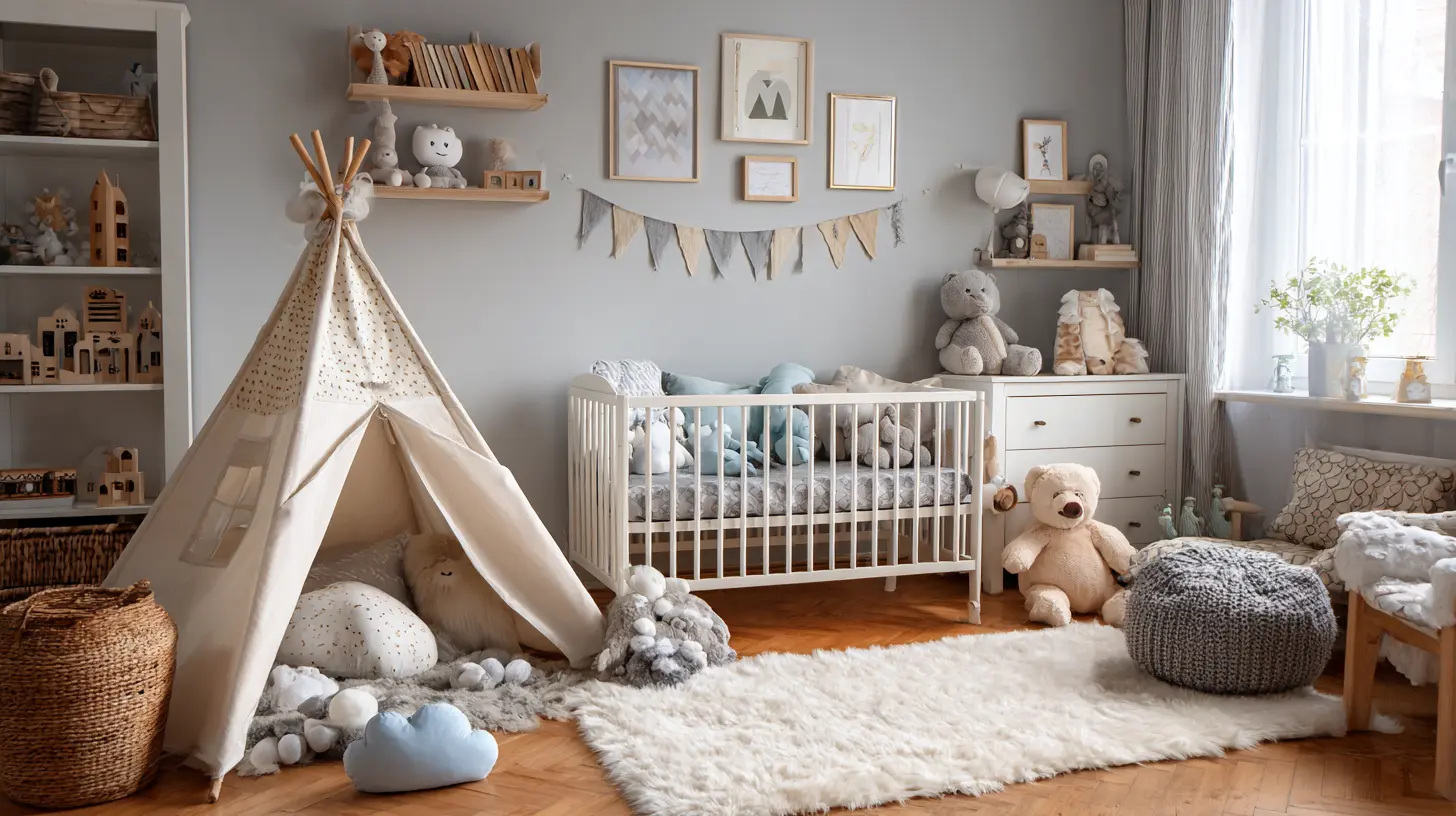
Layout and Flow: The Practical Side of Design
The layout of the nursery is a puzzle. You have to fit in a crib, a changing area, a feeding chair, and storage. The way you arrange these pieces affects how you function in the middle of the night and how the baby experiences the room.The Sleep Zone vs. The Play Zone
The biggest mistake in nursery layout is mixing the sleep zone and the play zone too closely. If the baby sees their crib as a place for play, they will resist sleep. If they associate their play area with the crib, they will be confused.Try to create a visual and physical separation. The crib should be in the quietest corner of the room, away from the door and away from windows with drafts. The play area should be on the opposite side, near a source of natural light. The changing area can be in between, as it is a transitional space.
This separation helps with the baby's mental mapping of the room. They learn that the crib is for sleep, the mat is for play, and the changing table is for a specific routine. This is a subtle but powerful way to support their developing sense of order.
The Changing Area: Efficiency and Safety
The changing table should be positioned so that you can see the door from where you stand. This is a practical safety tip. If someone enters the room, you see them immediately, and you are not startled. It also keeps you facing the baby, not turning your back on them.Keep everything you need within arm's reach: diapers, wipes, cream, and a change of clothes. If you have to turn away to grab something, you have to take a hand off the baby. That is when accidents happen. The best setup is a caddy or a shelf right next to the changing pad. You should never leave the baby unattended on the changing table, even for a second. Have a designated spot on the floor as a safe place to put the baby down if you absolutely must leave the room.
Lighting: The Overlooked Factor
Lighting is one of the most underrated elements of a nursery. Harsh overhead lights are jarring, especially during nighttime feedings and diaper changes. They wake the baby up fully, making it harder for them to go back to sleep.The expert approach is to use layered lighting. You want a dim, warm light for nighttime routines. A small lamp with a low-wattage bulb or a dimmable wall sconce works well. You also want a slightly brighter light for playtime and for when you need to see clearly, like when you are dressing the baby. And you want blackout curtains or shades to block out early morning light and streetlights.
The trade-off is between darkness for sleep and light for safety. You need to be able to see the baby clearly in the middle of the night, but you also want to keep the room dark enough to encourage sleep. A dimmable lamp solves this problem. You can set it to a very low level for nighttime checks and turn it up slightly for diaper changes.
Common Misconceptions and Myths
There is a lot of bad advice floating around about nursery design. Let us clear up a few of the most persistent myths.Myth: You Need a Theme
You do not need a theme. A nursery theme is for the parents, not the baby. The baby does not care if there are safari animals or stars and moons on the wall. They care about contrast, stimuli, and safety. A theme can actually be harmful if it leads you to fill the room with unnecessary decor items that gather dust or pose hazards.That said, a theme can be useful if it helps you make cohesive choices. If you love a woodland theme, that is fine. Just do not let it drive your decisions. Let safety and function drive your decisions, and let the theme be a minor aesthetic layer on top.
Myth: More Toys Means More Development
This is false. A baby does not need a room full of toys. They need a few high-quality objects that they can interact with deeply. Too many toys lead to overstimulation and a shortened attention span. The expert recommendation is to rotate toys. Keep only a few out at a time, and swap them every week or two. This keeps the objects novel and interesting without overwhelming the baby.Myth: A Nursery Must Be Perfect Before the Baby Arrives
This is a source of enormous pressure for new parents. The reality is that you will adjust the nursery constantly in the first few months. You will realize the changing table is in the wrong spot. You will discover that the blackout curtains are not dark enough. You will find that the baby prefers to nap in the living room, not the nursery. That is normal.The nursery is a living space. It should evolve with your baby. Do not stress about getting everything right before the birth. Focus on the non-negotiable safety items, and let the rest be a work in progress.
Practical Steps for a Balanced Nursery
If you are starting from scratch, here is a practical sequence to follow.First, focus on the air quality. This is often ignored. A nursery should have good ventilation. Use a fan or an air purifier to keep the air moving. Keep the room at a comfortable temperature, around 68 to 72 degrees Fahrenheit. Overheating is a risk factor for SIDS, so a cooler room is safer.
Second, choose your flooring. Carpet is softer for falls, but it traps dust and allergens. Hardwood is easier to clean, but it is unforgiving. A compromise is a non-toxic area rug with a non-slip pad on top of hardwood. Make sure the rug is low-pile so it is easy to vacuum and does not create a trip hazard.
Third, address electrical safety. Install outlet covers that are not easy for a toddler to remove. The slide-style covers are better than the small plastic plugs because they are harder to pry out. Keep all cords out of reach, and use cable management boxes for any necessary wiring.
Fourth, install a carbon monoxide detector and a smoke detector in or near the nursery. This is a no-brainer, but it is often forgotten in the excitement of decorating.
Fifth, think about the future. The nursery you design for a newborn will not work for a one-year-old. Plan for flexibility. Use furniture that can transition, like a crib that converts to a toddler bed. Use storage that can be repurposed. Avoid painting the walls a bold color that you will have to repaint in two years.
The Emotional Environment
The physical environment matters, but the emotional environment matters more. A nursery is not a substitute for a parent. All the mobiles, mirrors, and sensory mats in the world will not replace your presence, your voice, and your touch.The best thing you can do in the nursery is to spend time there that is not goal-oriented. Sit on the floor with your baby. Let them crawl over you. Talk to them about what they see. Let them watch you fold laundry or read a book. These moments of shared presence are the most stimulating and the most calming experiences you can offer.
The nursery should feel like a refuge for both of you. It should be a place where you can escape the chaos of the rest of the house. It should be a place where you can sit in the dark, hold your baby, and just breathe.
In the end, creating a safe and stimulating nursery is not about buying the most expensive gear or following the latest trends. It is about understanding how your baby grows, what they need at each stage, and how to remove the risks that stand between them and healthy development. It is a balance. You are building a fortress and a playground in the same room. That is not easy, but it is one of the most meaningful projects you will ever take on.
all images in this post were generated using AI tools
Category:
Baby Care BasicsAuthor:

Kelly Snow