How to Turn Everyday Conversations into Learning Moments
3 August 2026
Ever found yourself answering your child’s “Why?” for what feels like the 674th time today? You’re not alone! As parents, we’re constantly navigating through a sea of questions—some adorable, some baffling, and others downright exhausting. But what if I told you that those little chats you have with your child while cooking dinner, driving to school, or folding laundry are actually hidden gold mines for learning?
Yep, those everyday conversations are more than just talk—they're powerful opportunities to plant seeds of curiosity, critical thinking, and even emotional intelligence in your child’s brain. And the best part? You don't need a degree in education or fancy flashcards to do it.
Let’s dive into how turning simple, everyday chatter into rich learning moments is not only doable, but incredibly rewarding.
Why Everyday Conversations Matter
So, why is casual talk so important? Think of your child’s brain like a sponge soaking up the world around them. Every word, every question, every answer you give—these are all building blocks shaping how they think, feel, and interact.Studies have shown that the number of words children hear from adults in the early years has a direct impact on language development and even future academic success. But it’s not just about quantity—it’s the quality of the interaction that really counts.
And where do these magical interactions usually happen? Not always during structured "learning time," but rather in the car, at the grocery store, during bath time—you get the idea.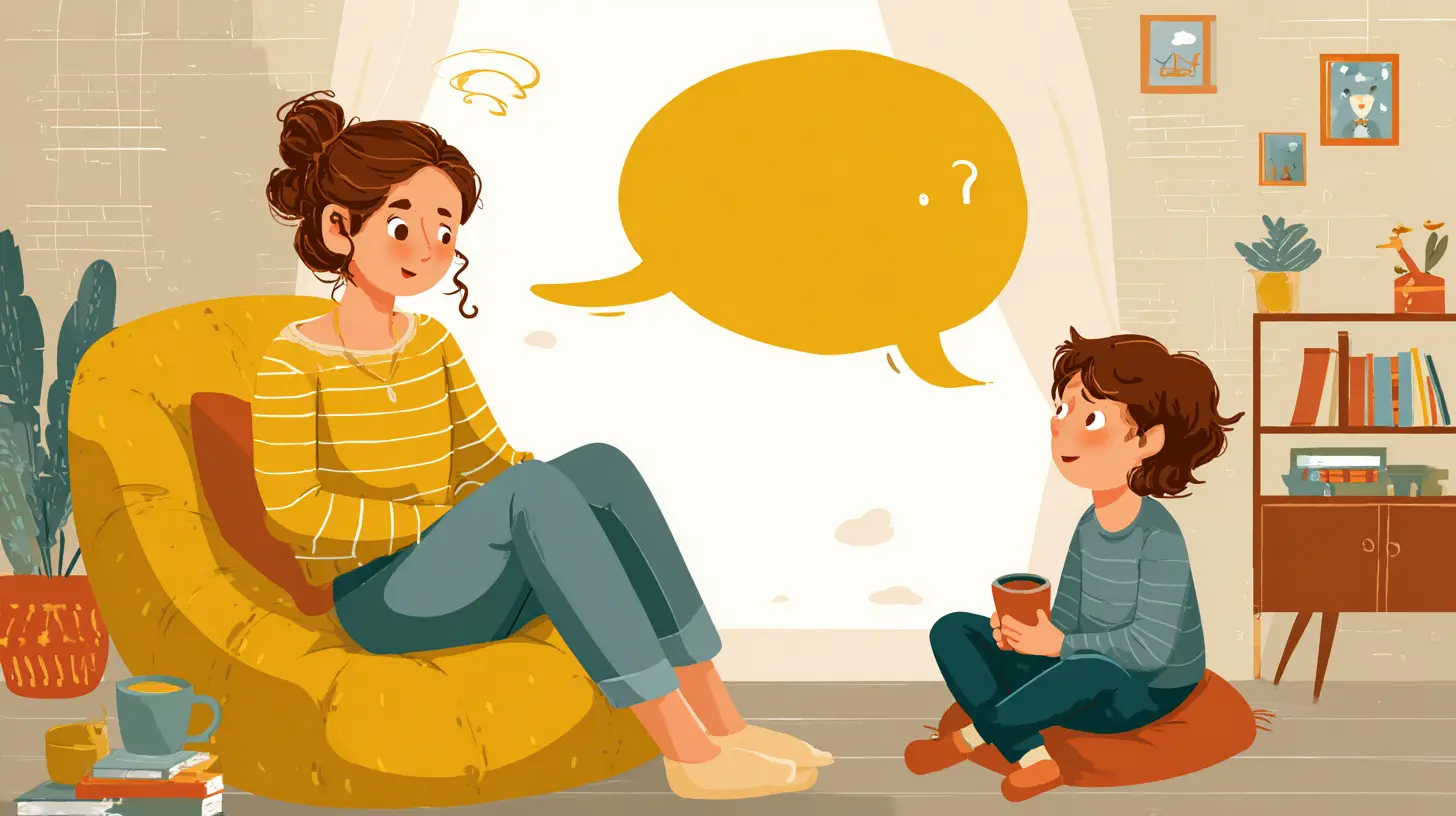
The Power of Talking in the Moment
Let’s take a step into real life.You’re baking cookies with your 5-year-old. Instead of simply instructing, "Put in 1 cup of sugar," you ask, “What do you think sugar does in a cookie?” Boom—now you’re talking about science.
Or when your 9-year-old asks why the sky is pink at sunset instead of just saying, “It always looks like that,” say, “Great question! What do you think makes it pink?” Now you’ve just lit a fire of curiosity that could last a lifetime.
Quick Tip:
Turn everyday tasks into "Wonder Why" moments. Ask open-ended questions like:- “Why do you think that happened?”
- “What would happen if we tried it this way?”
- “How would you explain this to your little brother?”

Make Every Word Count
The kind of words and questions we use matter. Kids are naturally curious (like REALLY curious), but how we engage with that curiosity influences whether they keep asking questions or stop altogether.Here’s what you can do:
1. Ask, Don’t Just Tell
Instead of saying, "That's a cat," say “What animal do you think that is?” Even if they say "dog" when it's clearly a cat, you’re opening up room for conversation and corrections in a kind way.2. Go Beyond the Obvious
When your toddler points at a truck and says “Big truck!” instead of just agreeing, say, “Yes, it’s a garbage truck. What do you think it does?” This nudges them a bit deeper than their original observation.3. Talk Through Your Thinking
When making decisions like choosing vegetables at the supermarket, say out loud, “I think I’ll get broccoli today. It’s full of vitamins and goes well with dinner.” You’re modeling critical thinking and planning.
Learning Isn’t Just Academic
Let’s not box learning into just ABCs and 123s. Life skills, emotional awareness, and empathy are just as important, and they can grow from conversations too.Navigating Big Feelings
If your child is upset, don’t just say, “Stop crying.” Instead, try “You seem sad. Want to talk about it?” Then, dive into questions like:- “What made you feel that way?”
- “What do you think we could do next time?”
You’re teaching emotional literacy just by naming feelings and asking questions.
Teaching Patience and Problem Solving
When something goes wrong, resist jumping in to fix it immediately. Talk through the problem. “Hmm, your puzzle piece doesn’t fit. What else could we try?”These mini-conversations add up—they're like little emotional workouts that build resilience and confidence.
Seize the Micro-Moments
You don’t need to carve out special “learning time” (although that’s awesome too). Everyday conversations often happen in what I like to call micro-moments—the small, ordinary chunks that fill our days. And let me tell you, they are parenting gold.In the Car
Use commuting time to ask fun "Would You Rather" questions or talk about your day: “What was the best thing that happened at school today?”At the Grocery Store
Talk about colors, shapes, how things grow, money, prices, and even meal planning. “Hmm, how do you think we can tell which apple is ripe?”—there's science, math, AND decision-making in that one question.During Meals
Ask questions that spark connection:- “If you could be any animal today, what would you be and why?”
- “What made you smile today?”
At Bedtime
Bedtime doesn’t just have to be about books and brushing teeth. It's a quiet, cozy time to talk about anything from dreams to worries. Those end-of-day chats can turn into some of the most heartfelt learning moments.Be Curious Together
Here’s a little secret: You don’t have to know everything to be an effective “teacher.” In fact, admitting you don’t know is a powerful lesson in itself.If your child asks a question you can’t answer, respond with:
- “Hmm, I’m not sure. Let’s find out together.”
- “That’s a great question; let’s look it up.”
You're teaching them how to seek answers, not just receive them. That’s a lifelong skill.
Use Technology Wisely
We live in a digital world, and while we don’t want screens raising our kids, technology can support learning if used intentionally.Watch a short educational video and then talk about it:
- “What did you think about that?”
- “What was surprising?”
- “What would you do in that situation?”
Or, use a voice assistant together: “Hey Alexa, what’s the capital of Australia?” Boom—a geography lesson without a textbook.
Normalize Mistakes and "I Don't Know"
Real talk—kids don’t need perfect parents; they need real ones.When you make a mistake, talk about it. Say, “Oops, I forgot the milk. That happens sometimes. What should we do now?” That’s a learning moment right there about problem-solving and handling slip-ups.
When you don’t know the answer, don’t fake it. Saying, “That’s something I never thought about!” shows humility and curiosity—a powerful combo you want your kids to pick up on.
Keep It Light and Fun
Not every conversation needs to be a deep dive into the mysteries of the universe. Keep it playful. Use humor. Get goofy. Have fun with words, make rhymes, invent stories together. Use funny voices, make up silly names for things—they’re still learning, even through laughter.Remember, when kids are relaxed and happy, they're more open to learning.
Real-Life Examples of Learning Moments
Here are a few everyday scenarios turned into magical learning experiences:- Making Breakfast: Talk about where eggs come from, how heat cooks food, fractions in recipes, or let them crack the egg and observe the changes.
- Walking the Dog: Discuss animal behavior, take note of plants, practice being responsible, or even play “I Spy” with a twist.
- Laundry Day: Sort clothes by color, talk about materials, identify patterns, and make predictions (“Let’s guess how many jeans we have!”).
Final Thoughts
Turning everyday conversations into learning moments doesn’t require extra time, money, or effort. It just takes a little shift in perspective. When you start seeing the world through your child’s curious eyes, you realize that opportunities to teach—and more importantly, to connect—are everywhere.Whether you're folding socks, stuck in traffic, or brushing teeth, each interaction holds the power to not just pass time, but to shape minds.
So next time your child asks a "Why?", take a breath, lean in, and talk it out. Who knows—you might just learn something too.
all images in this post were generated using AI tools
Category:
Communication With KidsAuthor:

Kelly Snow