The Rise of Digital Parenting Networks in 2026
17 April 2026
Remember that old saying, “It takes a village to raise a child”? For years, we’ve nodded along, feeling a pang of something like loneliness. Where is this mythical village? Is it hiding behind the perfectly curated Instagram posts of a mom who seems to have it all together? Is it in the fleeting chat at the school gate before the bell rings? We’ve been yearning for that collective wisdom, that shared burden, that sigh of relief that says, “You too? I thought it was just me.”
Well, buckle up. The village has arrived. But it doesn’t look like a quaint collection of cottages. It’s digital, it’s intelligent, and by 2026, it’s fundamentally rewriting the script of modern parenting. This isn’t just about Facebook groups or niche subreddits anymore. We’re talking about the rise of Digital Parenting Networks—hyper-connected, AI-facilitated, purpose-built ecosystems that are becoming as essential as the diaper bag. Let’s pull back the curtain on this quiet revolution.
From Scattered Forums to Integrated Ecosystems: The Great Convergence
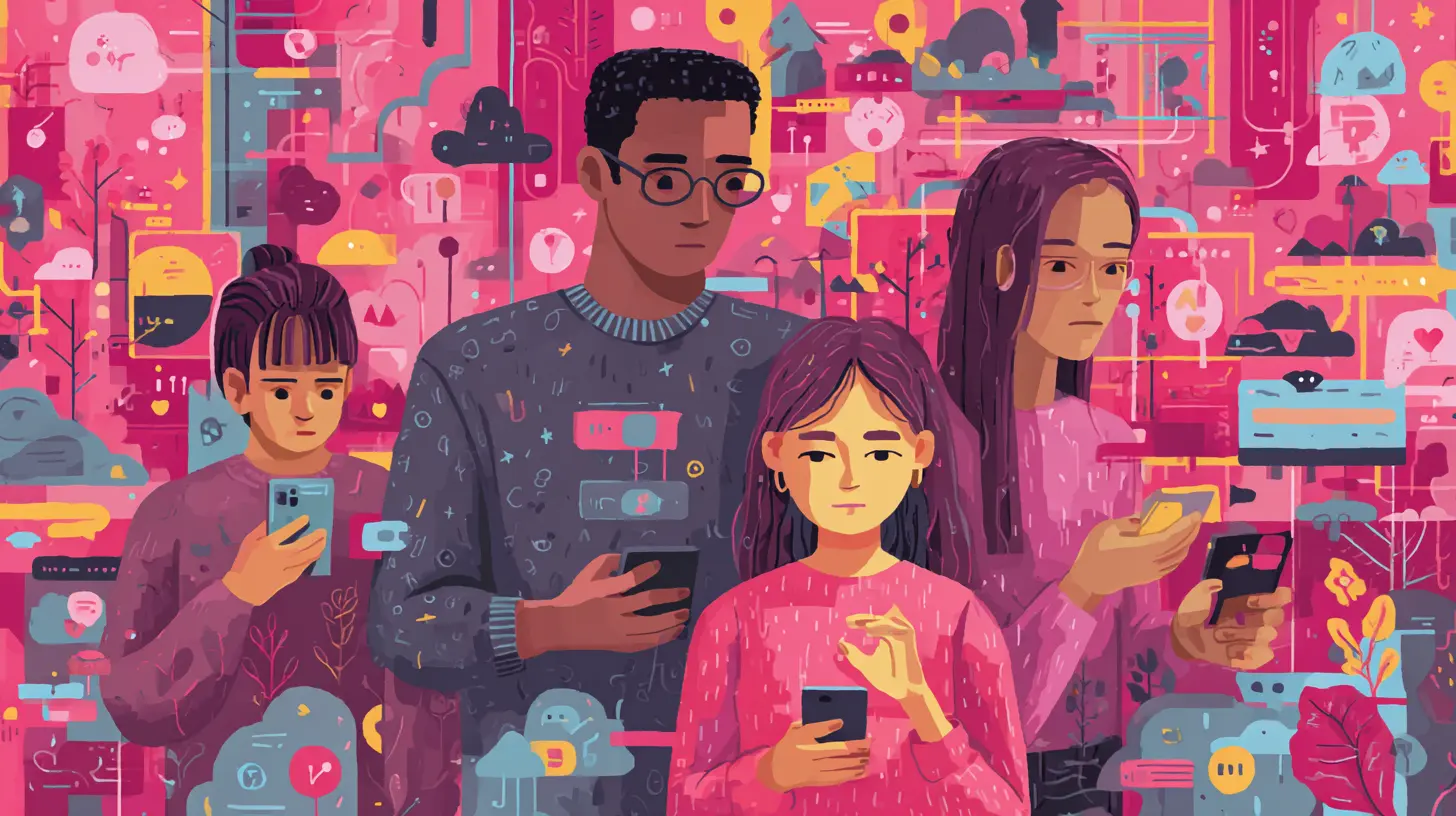
Think back to just a few years ago. Your parenting resources were… fragmented, to say the least. You had an app for tracking feedings, a separate one for sleep, a Facebook group for local advice, a notes app full of pediatrician quotes, and a camera roll bursting with “Is this rash normal?” photos. It was exhausting. Your village was a dozen different maps to a dozen different towns.The digital parenting networks of 2026 have orchestrated a great convergence. Imagine a single, secure platform—let’s call it your Family Digital Hearth. Here, everything coalesces. It’s part logistics coordinator, part wisdom keeper, part emergency hotline. These networks understand that parenting isn’t a series of isolated tasks (feeding, sleeping, disciplining). It’s a fluid, chaotic, beautiful symphony. And they’re providing the conductor’s score.
The AI Guardian Angel: More Than Just a Chatbot
At the heart of these networks lies an intelligence that feels less like a machine and more like a very well-read, incredibly patient, and non-judgmental aunt. We’re moving far beyond simple Q&A chatbots.Say your six-year-old has developed a persistent cough at 2 AM. In 2024, you’d panic-Google and spiral into a WebMD nightmare. In 2026, you open your network app. Its AI, which has learned your child’s baseline health from connected devices (with your explicit permission, of course), cross-references the cough’s sound (analyzed via your phone’s microphone), its timing, and local pathogen reports. It might say: “This matches a pattern of croup going around Oakwood Elementary. Humidity often helps. Here are three safe, pediatrician-reviewed methods to try tonight. I’ve also alerted your ‘Inner Circle’ that you might be up.” It then prepares a succinct summary for your pediatrician’s portal. The panic subsides. You have a plan. You feel supported.
This AI doesn’t just react; it anticipates. It notices your logged fatigue and suggests a meal-train from your network for Thursday. It sees your toddler’s developmental milestones and connects you with a micro-community of parents in the network whose kids are in the exact same “climbing-everything-with-words-for-ants” phase.
The Trust Architecture: Building Walls in a World Without Gates
Here’s the million-dollar question, the elephant in the digital nursery: Trust. How can we possibly feel safe pouring the most intimate details of our family’s life into a network? The breakthrough of 2026 isn’t just technological; it’s sociological. It’s the Trust Architecture.These networks operate on a principle of concentric circles of sharing, like a digital stone dropped into a pond. At the center is your “Nucleus”—your partner, maybe a grandparent or two. They see it all. The next ring is your “Inner Village”—your closest parent-friends, the ones you’d call at 3 AM. They might see daily logs, struggles, and triumphs. The outer ring is your “Extended Network”—local parents, parents of kids with similar interests, experts. Here, you share anonymized data or specific queries: “Any recommendations for a science-loving 10-year-old in Austin?” without revealing your child’s identity.
Blockchain-like technology (don’t glaze over—it’s just a fancy, un-hackable ledger) ensures you own your data. You decide what leaves your device. You can revoke access in an instant. You can even “lease” anonymized data to child development researchers for a micro-payment that goes into your child’s college fund. The power has decisively shifted back to the parent. The network’s currency isn’t your data to sell; it’s your trust to earn.
The Micro-Community Phenomenon: Finding Your Exact Tribe
The era of massive, noisy, generic parenting groups is fading. 2026’s networks thrive on hyper-specific micro-communities. Algorithms (the good, helpful kind) don’t just connect you with “parents.” They connect you with:* Parents of left-handed, soccer-playing, dyslexic 8-year-olds in coastal climates.
* Adoptive parents navigating teenage identity formation with open adoptions.
* Parents who are also caring for their own aging parents—the “Sandwich Generation” support squad.
This is where the magic happens. Your very specific, “Am I the only one…?” question finds a dozen nodding heads. Advice is contextual, deeply relevant, and battle-tested in scenarios eerily similar to your own. It’s the difference between getting generic “parenting advice” and getting a field manual written for the exact terrain you’re hiking.
The Real-World Bridge: From Digital Nods to Physical Hugs
A skeptic might say, “This is just more screen time! It’s isolating!” But the most fascinating trend of 2026 is how these networks are masterfully building bridges back to the physical world. They are the ultimate digital-to-analog converters.The network doesn’t just host a chat about playgrounds. Its AI, knowing three kids in your Inner Village love geology, scans local events and suggests a guided fossil hunt at the state park next Saturday. It then handles the RSVPs, coordinates carpools based on real-time location and schedules, and even pre-orders the group’s picnic lunches from a local deli. The digital conversation becomes a real-world adventure.
It facilitates skill-swaps within your neighborhood: “I see you’re struggling with toddler meal prep. Lisa three streets over is a pediatric nutritionist and has a slot open. She needs help building an IKEA bookshelf. Want me to propose a trade?” Suddenly, your village has a carpenter, a nutritionist, and a math tutor living within a five-block radius, and you’re all connected not by awkward asks, but by a seamless, dignity-preserving system.
The Ethical Frontier: Are We Outsourcing Intuition?
Now, let’s get uncomfortable. This is where the mystery deepens. As these networks become more insightful, a profound ethical question emerges: Where does the network’s suggestion end and my parental intuition begin?If the AI suggests a disciplinary strategy based on 10,000 similar scenarios, and it works flawlessly, do I stop questioning? If it predicts a potential social difficulty for my child in sixth grade based on subtle interaction patterns, do I intervene preemptively? We are, in essence, creating a collective parenting brain—a hive mind of child-rearing. The benefits are staggering: less guesswork, more evidence-based strategies, shared trauma, and amplified joy.
But the risk? It’s the slow erosion of our own confidence. It’s the potential for a homogenized approach to raising wildly unique little humans. The networks of 2026 that will thrive are those that build in “Intuition Pauses.” They won’t just give an answer; they’ll say, “Here’s what the data suggests in situations like yours. Here are three perspectives from parents in your network. Now, pause. What is your gut telling you about your child?” They become a co-pilot, not an autopilot.
Glimpsing 2026: A Day in the Networked Life
Let’s paint a picture of a Tuesday in 2026 for Maya, a mother of two:* 7:00 AM: The network’s gentle wake-up aligns with her kids’ optimal sleep cycles. It’s learned that rushing leads to meltdowns, so it adjusted the morning schedule 15 minutes earlier, seamlessly syncing with the smart coffee maker.
* 3:00 PM: A notification pings: “Lucas’s wearable indicates elevated stress biomarkers after school. 82% of kids in his class with similar data reported a conflict on the playground today. Would you like to: a) See de-escalation techniques, b) Connect with Liam’s mom (they usually walk home together), or c) Initiate a ‘Calm Corner’ routine at home?” Maya chooses (b) and gets a quick, empathetic voice note from Liam’s mom explaining a minor scuffle, already resolved. Crisis averted.
* 8:00 PM: The network prompts: “You logged ‘exhaustion’ 4 nights this week. Your Inner Village has available bandwidth. Kai can take the kids Saturday morning for 3 hours. Accept?” She does. A real-world break is locked in.
* 9:00 PM: She scrolls her micro-community for “Parents of Adopted Teens.” A shared article about identity sparks a rich, asynchronous video discussion. She feels seen, in a way her physical neighborhood could never provide.
This isn’t science fiction. It’s the logical, and perhaps inevitable, culmination of our desire to connect, our need for support, and our technology’s ability to facilitate it meaningfully.
The Human Heart in the Digital Machine
So, as we stand on the brink of 2026, the rise of digital parenting networks presents us with a choice. It’s not a choice of whether to join, as these tools will become as ubiquitous and essential as smartphones. The choice is how we engage with them.Will we let them replace the messy, beautiful, intuitive dance of parenting? Or will we wield them as the most powerful tool ever created to amplify our love, our connection, and our collective wisdom? The village is no longer a place. It’s a pulse—a living, breathing, intelligent network in your pocket, waiting to help you build the family life you envision, one connected, supported moment at a time. The mystery isn’t whether it’s coming. The mystery is what kind of parents we will become with it by our side.
all images in this post were generated using AI tools
Category:
Parenting And Support SystemsAuthor:

Kelly Snow
Discussion
rate this article
2 comments
Vito Benson
Absolutely love this! As a busy parent, finding community online has been a game-changer. It’s comforting to connect with others facing the same challenges and joys. Here’s to supportive networks that make parenting a little less lonely! 😊
April 21, 2026 at 3:23 AM
Kelly Snow
Thank you! I’m glad to hear that online communities are making a positive impact on your parenting journey. Here’s to more connections and support! 😊
Geneva Carter
The emergence of digital parenting networks in 2026 highlights a significant shift in how parents connect and share resources. These platforms offer invaluable support but also raise concerns about privacy, screen time, and authenticity in parenting discourse.
April 19, 2026 at 4:01 PM
Kelly Snow
You're absolutely right. The rise of digital parenting networks indeed reflects a major change. While they provide essential support, the concerns you mentioned are important to address as we navigate this new landscape.