Asia Pacific Organic Baby Food Market to Surpass USD 5.09 Billion by 2033 as Health-Conscious Parenting Reshapes Infant Nutrition
May 26, 2026 - 23:02
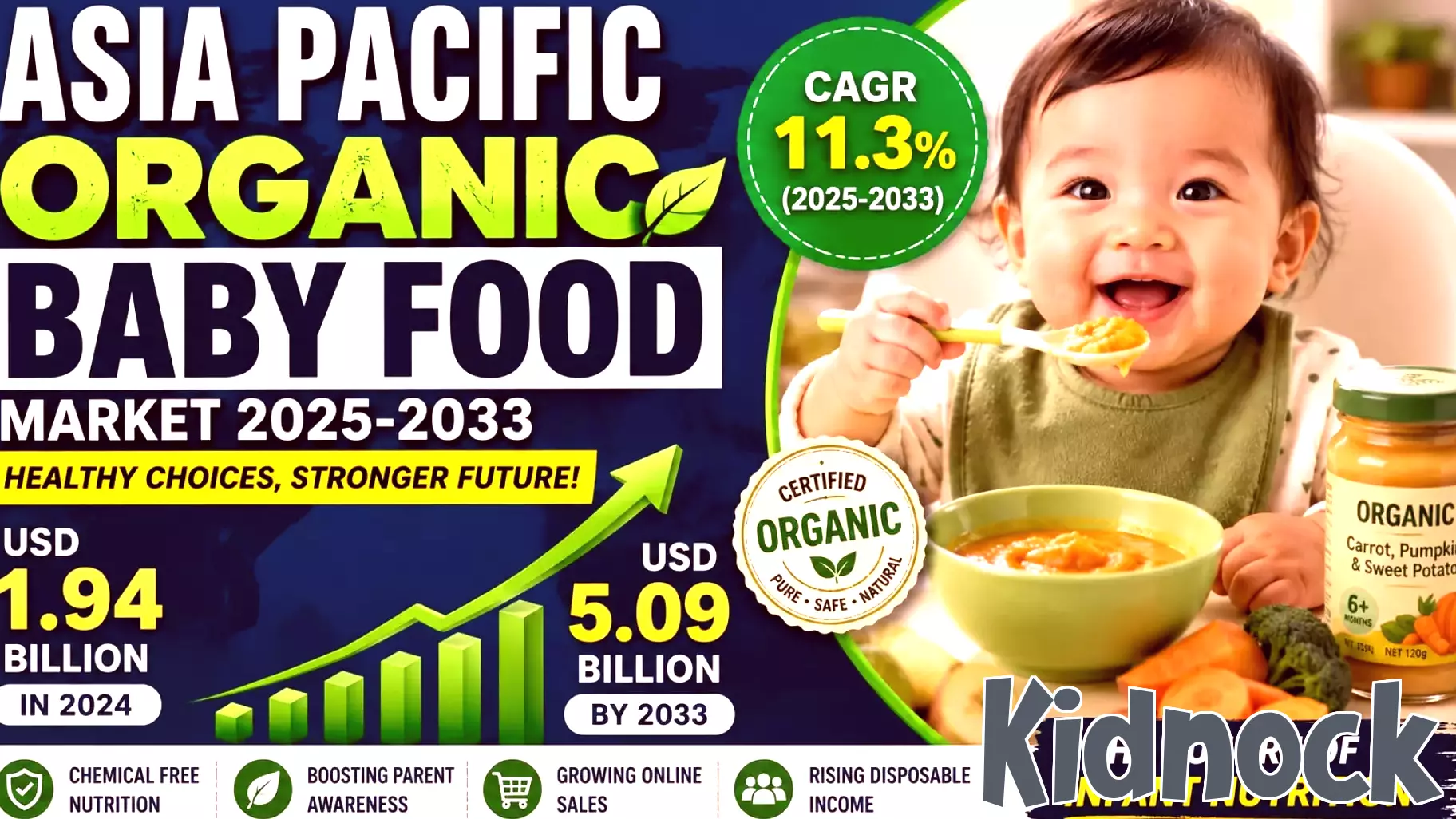
Rising demand for chemical-free infant nutrition, growing disposable incomes, and booming online retail channels are accelerating the growth of the Asia Pacific organic baby food industry. The market is projected to surpass USD 5.09 billion by 2033, driven by a fundamental shift in how modern parents approach early childhood feeding.
Health-conscious parenting has become a dominant force across the region, particularly in countries like China, India, Japan, and Australia. More families are actively avoiding synthetic pesticides, artificial preservatives, and genetically modified ingredients in their children's meals. This trend is not limited to wealthy urban households. Middle-class families in emerging economies are also spending more on premium, certified organic products as awareness spreads through social media and parenting networks.
The expansion of e-commerce has played a critical role in making organic baby food accessible. Online platforms offer a wider variety of brands and formulations compared to traditional brick-and-mortar stores, and they often provide detailed ingredient sourcing information that resonates with cautious buyers. Subscription services for baby food delivery have also gained traction, offering convenience and consistency for busy parents.
Another factor fueling growth is the rise in dual-income households across the region. With both parents working, there is less time for homemade baby meals, but a strong desire to avoid processed options. Organic purees, snacks, and formula provide a middle ground that fits modern lifestyles.
Regulatory developments are also supporting the market. Several Asia Pacific governments have tightened food safety standards for infant products, which has increased consumer trust in certified organic labels. This regulatory push has encouraged local manufacturers to invest in organic supply chains rather than relying solely on imports.
However, the market still faces challenges. Higher price points remain a barrier for lower-income families, and inconsistent certification standards across different countries can create confusion. Some consumers also remain skeptical about whether organic products deliver meaningful health benefits over conventional options.
Despite these hurdles, the long-term outlook is strong. As the first generation raised on organic principles becomes parents themselves, the demand for clean-label infant nutrition is expected to deepen. The Asia Pacific market is likely to see continued innovation in product formats, including organic ready-to-feed meals, allergen-free options, and regionally inspired flavors tailored to local palates.
MORE NEWS

July 11, 2026 - 03:33
Kristin Cavallari reveals controversial parenting moveKristin Cavallari is standing by a parenting decision that has raised some eyebrows. During a recent appearance on the `Aspire with Emma Grede` podcast, the reality star and businesswoman opened up...

July 10, 2026 - 08:42
Parenting in the age of ‘Tight and Pretty’Recently, I watched the music video for `Tight and Pretty.` Let me first say that the young performer is clearly talented, confident, and comfortable on stage. I hope some of our more experienced...

July 9, 2026 - 18:10
R Madhavan reveals simple parenting trick that taught son Vedaant gratitude, humility & true value of moneBollywood actor R Madhavan recently opened up about the straightforward parenting method he used to raise his son, Vedaant Madhavan, who has since become a champion swimmer. Madhavan stressed the...

July 9, 2026 - 04:57
“Will speaking two languages confuse my child?”: Pediatrician busts the most common bilingual parenting mythMany parents raising children in bilingual households have heard the same warning from well-meaning friends or relatives: `If you speak two languages at home, you will confuse your child.` A...